Nanjing Normal University · Interdisciplinary Intelligence

Machine Learning for
Real-World Science

KOMABA GrouP advances AI for Science and interdisciplinary intelligence through interpretable, verifiable methods.

School of Computer and Electronic Information / School of Artificial Intelligence

AI for Science begins with real questions.Explore More

Scientific Questions. Intelligent Exploration.

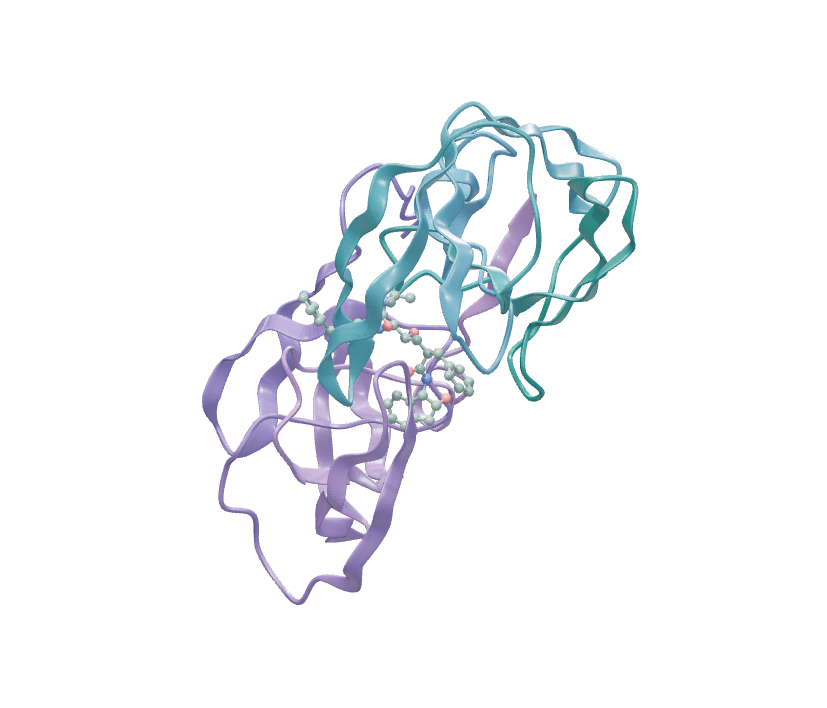
From catalysis and proteins to reliable recognition and research agents,
we connect algorithms with applications through real scientific problems.

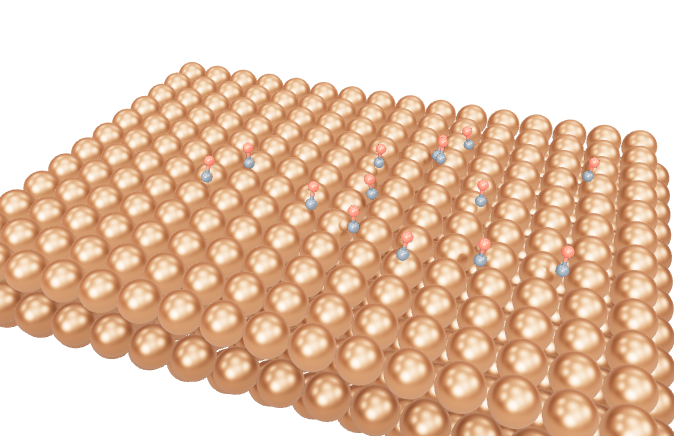
Cu CopperC CarbonO OxygenConceptual View
Move the pointer to rotate the view ↔
Cu(100) / CO Adsorption

Copper Catalysis & Reaction Mechanisms

Understanding Catalysis
on Copper Surfaces.

Starting with adsorbed molecules and local configurations, we investigate structures and mechanisms in copper-based electrocatalysis, connecting catalyst design, process visualization, and machine learning.

  • Catalyst design and reaction mechanisms
  • Visualization of catalytic processes
  • Protein and drug engineering
  • Bioimaging and aquatic ecology
KOMABA · Interdisciplinary Intelligence

Across Disciplines,
Grounded in Real Problems.

Knowledge Of Machine Analogies for Boundary-spanning Abstraction

We bring machine learning into materials, chemistry, and the life sciences, where algorithms are tested on real problems and become part of scientific discovery.

KKnowledgeOOfMMachine AAnalogiesBBoundary-spanningAAbstraction
7FacultyWeiguang Qu, Yanhui Gu, Peirong Ma
and 4 collaborating faculty members
1PhD student
21Master’s students
Across three cohorts
5+Undergraduates

An additional 1 PhD student and 26 master’s students from partner teams participate in our research.

The People Behind the Research

Team Members

Year 1

11 students
  • 曾乐言
  • 马一林
  • 杨东明
  • 杨唯杰
  • 毕欣玥 (female)
  • 陈吴洲 (female)
  • 黄萱萱 (female)
  • 丁恒一
  • 李明轩
  • 蒋宛茹 (female)
  • 刘济恺

Year 2

4 students
  • 彭宁康
  • 余前锋
  • 刘晨曦 (female)
  • 程传杰

Year 3

6 students
  • 刘亚飞
  • 邵坤
  • 何亦凡
  • 胡安杰
  • 周久涛
  • 毛婧飏 (female)
Alumni23 alumniView Names
  • 张昱昊
  • 李佳龙
  • 钱琳婧 (female)
  • 项锋
  • 李晓阳
  • 季冰洁 (female)
  • 李猛
  • 夏浩辉
  • 王建才
  • 雷潇
  • 郭晟杰
  • 昝荣华
  • 张先锋
  • 张利东
  • 王耀华
  • 鲍瑞琪
  • 蓝志权
  • 陈其文
  • 卢新宇
  • 王艳 (female)
  • 李菲妲(Rivita) (female)
  • 曹爽 (female)
  • 杜井涛

Names in red: female members

Interdisciplinary Collaboration

Our collaborations bring computational methods to real scientific problems, giving students hands-on experience in interdisciplinary publications, projects, and competitions.

Long-Term On-Campus Partnerships

Academician He Huang’s Team

Professor Yafei Li’s Team

Joint research on catalysis, proteins and drug discovery, biomedicine, and visual learning.

Prof. Yanhui Gu is a permanent member of the State Key Laboratory of Microbial Technology.

Selected Publication Venues

NeurIPSCVPRKDDAAAIACS Catalysis Advanced Functional MaterialsAngewandte ChemieChinese Chemical Letters

Undergraduate Research

From Reproducing Experiments to Real Research

Undergraduates can begin with data curation and experiment reproduction, then progress to thesis projects, publications, and competitions. Our students have won First Prize in the Jiangsu Outstanding Undergraduate Thesis Awards, and a group-supervised project received a Silver Award in the provincial Challenge Cup competition.

National Natural Science Foundation of China logo

Research Funding

Projects & Research Support

NSFC support spans a Key Program subproject, a Major Research Plan project, a General Program grant, and a Young Scientists Fund grant. Industry collaborations connect algorithmic research with practical validation.

01

Key Program Subproject · 2021—2025

Efficient Construction of CO₂ Reduction Electrocatalysts Based on Machine Learning

Yanhui Gu
02

Major Research Plan Incubation Project · 2024—2026

Interpretable Discovery of Catalytic Reaction Mechanisms Driven by Graph Grammars

Yanhui Gu
03

General Program · 2027—2030

Non-Steady-State Phase Evolution and Complete Reaction Pathway Analysis in Copper-Based CO₂RR Electrocatalysis Using Self-Evolving Agents

Yanhui Gu
04

Young Scientists Fund (Category C) · 2027—2029

Multi-Label Zero-Shot Action Recognition through Cross-Level Spatiotemporal–Semantic Collaborative Modeling

Peirong Ma

Research & Workspaces

From everyday on-campus collaboration to dedicated research space in Changzhou, we provide stable work environments for different types of research.

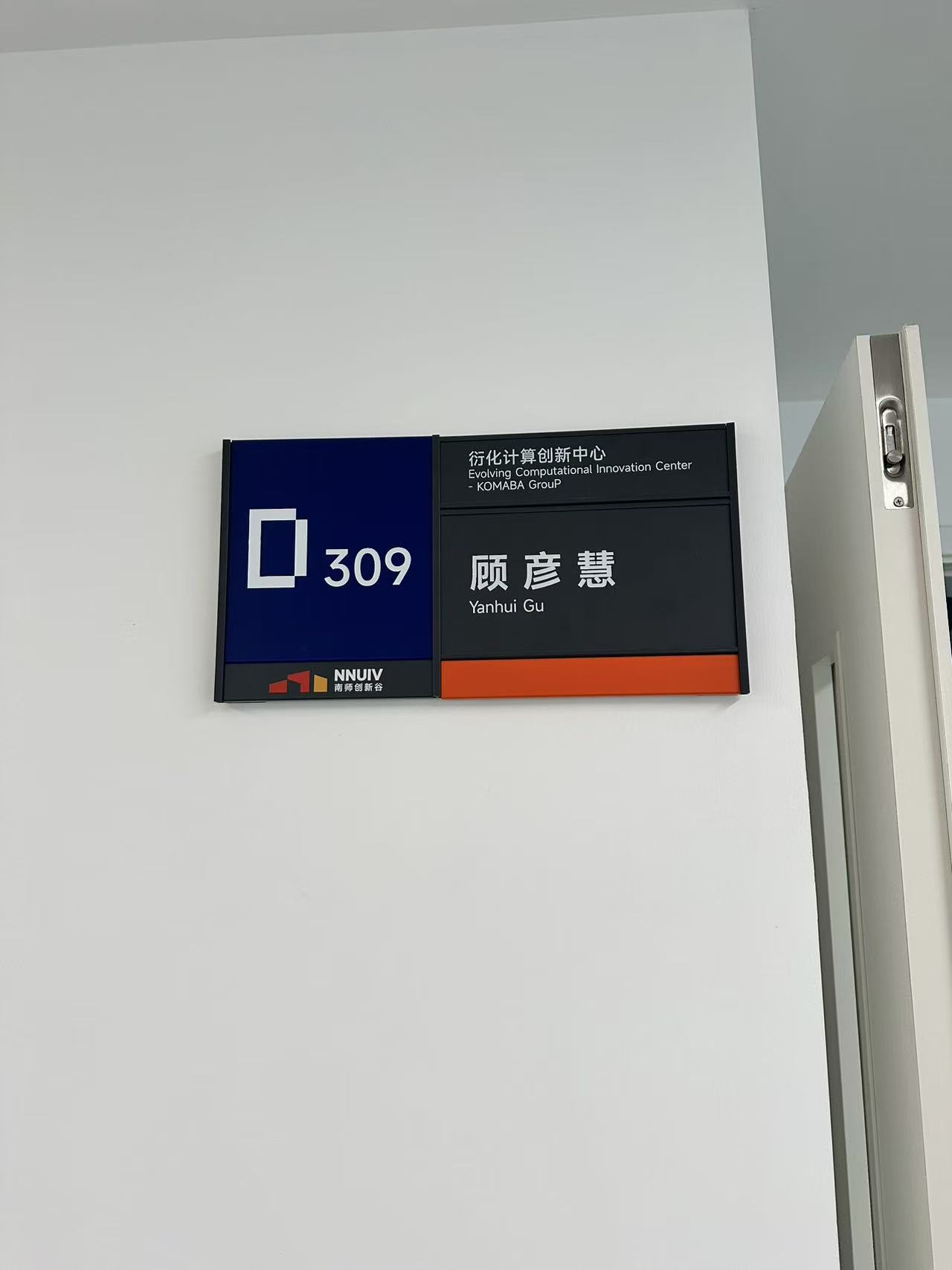
Room 309 sign at the Evolving Computational Innovation Center, Innovation Valley

01 / Mingli Building & Innovation Valley

On-campus research, student–faculty collaboration, and the Evolving Computational Innovation Center

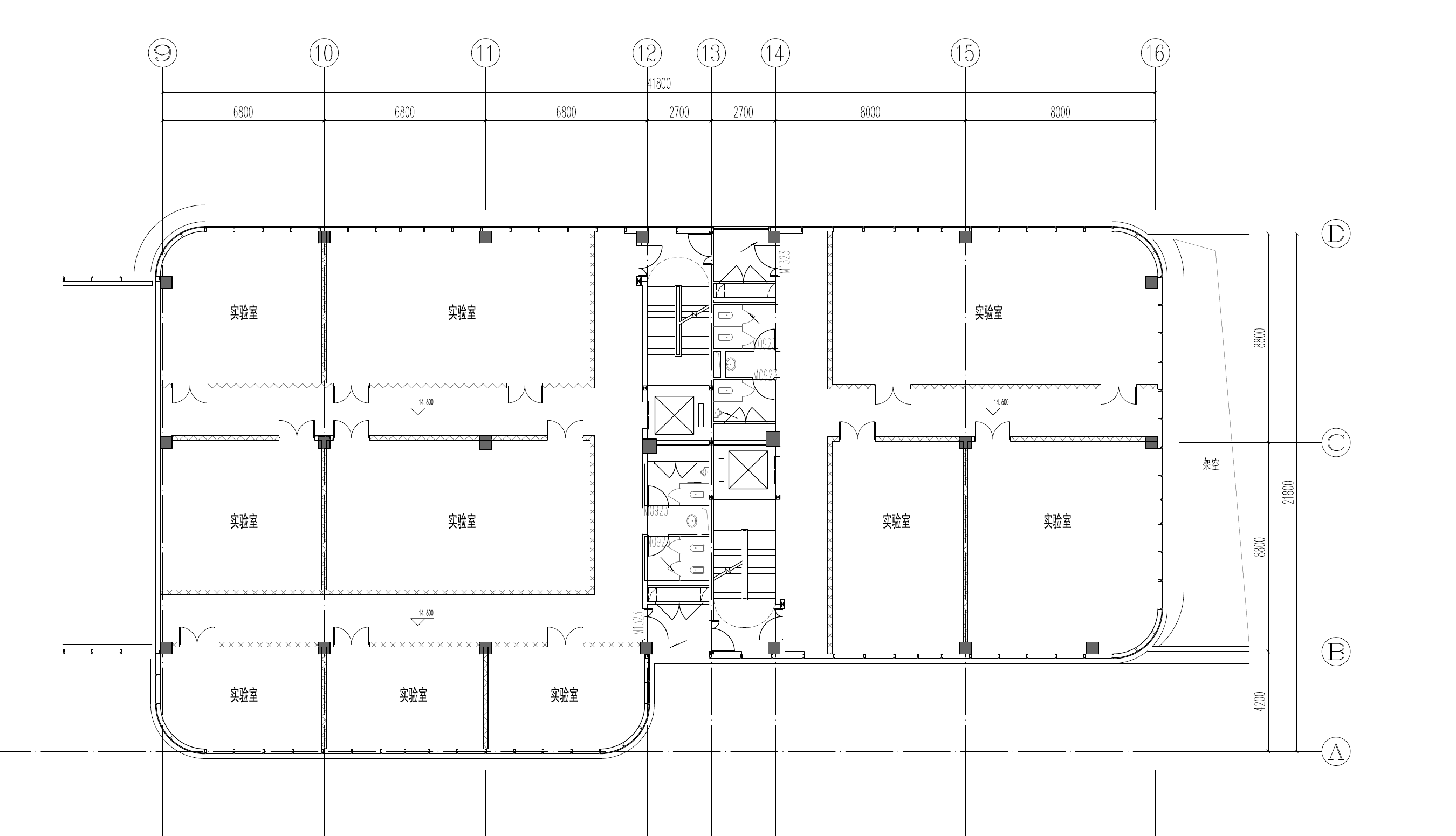
Floor plan of the Changzhou Future Institute of Technology

02 / Changzhou Future Institute of Technology

Near Changzhou North Railway Station: 24 planned laboratories, approximately 1,250 m²

Computing Resources

Compute for Sustained Experimentation

Supporting large-model training, graph learning, scientific computing, and multimodal experiments, with resources at Mingli Building and Changzhou.

H200Procurement underwayH100L40Procurement underway L20RTX 5090Expansion underwayRTX 4090

Expansion plan: two 8-GPU H200 servers, four 8-GPU RTX 5090 servers, and two 8-GPU L40 servers are being procured.

Growing at KOMABA

We value your initiative to learn and see problems through, whatever your background.

01

Recognition-Driven Mentorship

Deliver results and receive clear feedback and recognition.

02

Group Meetings & Interdisciplinary Discussion

Test computational methods against real scientific questions.

03

Collaborative Mentorship & Funding

Connect with a research network spanning computer science, materials, chemistry, and the life sciences.

Join Us

Who We’re Looking For

Skills can be developed. Reliability, initiative, and open communication are the foundations of lasting collaboration.

01

Integrity & Clear Communication

Be sincere and dependable, respect your collaborators, and explain complex questions clearly.

02

Resilience Under Pressure

Keep making steady progress through disappointing results, paper revisions, and engineering uncertainty.

03

Initiative

Identify problems, advance experiments proactively, and raise risks early.

PhD

Master’s

Undergraduates

We welcome students from computer science, mathematics, chemistry, materials science, biomedicine, and beyond. Interdisciplinary training matters more than disciplinary labels.

Welcome to KOMABA

Bring Your Questions
to KOMABA.

Tell us about your interests, experience, and the questions you want to pursue.
We welcome backgrounds in computer science, mathematics, chemistry, materials science, and the life sciences.